Thursday, July 19, 2012

La Cocina Que Canta

My job here at the Ranch is to teach 3 hands on cooking classes, while enjoying everything else that is offered—what’s not to love? Tuesday morning, Tuesday evening, and Thursday evening I teach at the cooking school, La Cocina Que Canta (The Kitchen that Sings) 


Gabriella giving instructions (she rocks!)


Salvador (It's HIS garden), Gaby, and Juan

All ready for dinner!

The Courtyard


Stations set up

Mise en place

Picking chives for our saute


The absolutely ridiculous and ugly border fence---the only thing it keeps out are indigenous animals

Picking Kale

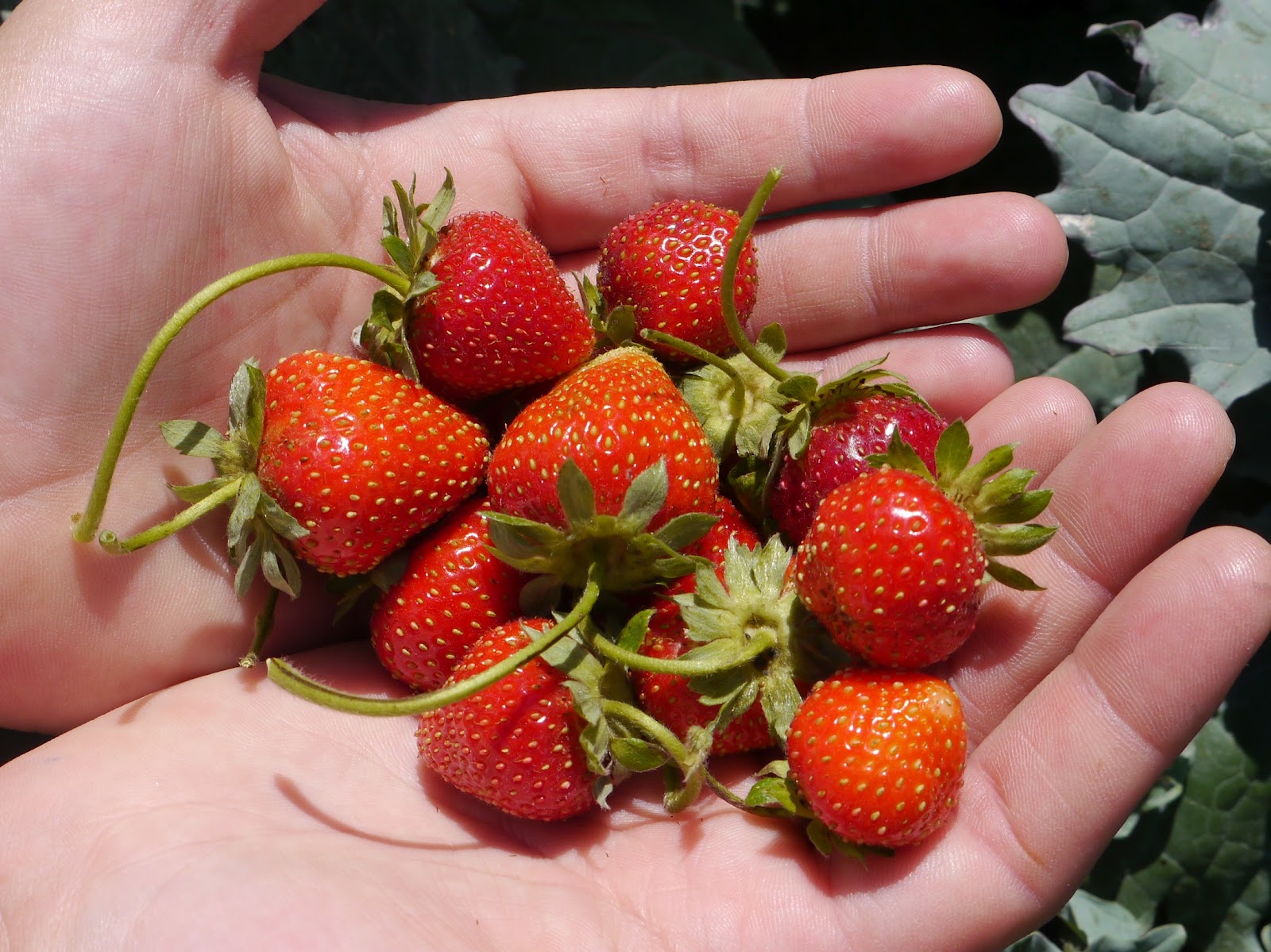
Strawberries


It’s a joy to take the students into Rancho Tres Estrellas (3 Star Ranch) to meet Salvador and to see his passion for the garden, and the ranch.  That is a recurring theme here, the employees and the guests have an affinity for this place, and many employees work here for decades.  The visitors are mostly returnees; it’s that special. 
 Tomorrow I'll post photos from our other classes.

Another World


40 miles south of San Diego, lies the city of Tecate, in Baja California.  A sleepy border town with a brewery, shops, auto repair businesses, and one of the largest employers, Rancho La Puerta.  Founded in 1940’s by Professor Edmond Szekely and his wife Deborah, Professor Szekely declaring that Tecate had the most perfect climate in the world.  Over the years, the ranch has evolved, and into a place of rest and refreshment for thousands of happy guests from around the world, offering mind, body and spirit fitness.


You could fill your days here with an activity every hour, or you could choose to be selective and decide what you want your week to be. I’ll be here from Monday through Friday and teaching 3 cooking classes, so I have elected the rest and relaxation track, with stretching in the morning, and swimming, to limber up my tight right shoulder that I broke last December.  

Around every winding path, there is a glimpse of beauty, from the beautiful sculptures, water flowing, flowers blooming, quail rushing through the underbrush, lizards lying in the sun and the vistas of the surrounding mountains, the beauty here, is breathtaking, and each walk leads you down a different path.  


There are art classes, and cooking classes, as well as all the exercise related classes.  The best part is the people you will meet; last time I was here, I met people from San Diego, but also met friends from Singapore, New York, and Canada.  Last night at dinner, I was seated with one woman from Switzerland, two from the Bay Area, and two from New York City; the two friends from NYC have known each other since they were 12 years old and they have come here for many years.  What a gift!  And the staff, many of whom have worked here for over 20 years, and their dedication to the ranch and its mission is remarkable.  
I am blessed to be here!
 

Wednesday, June 27, 2012

It's in the Bag!

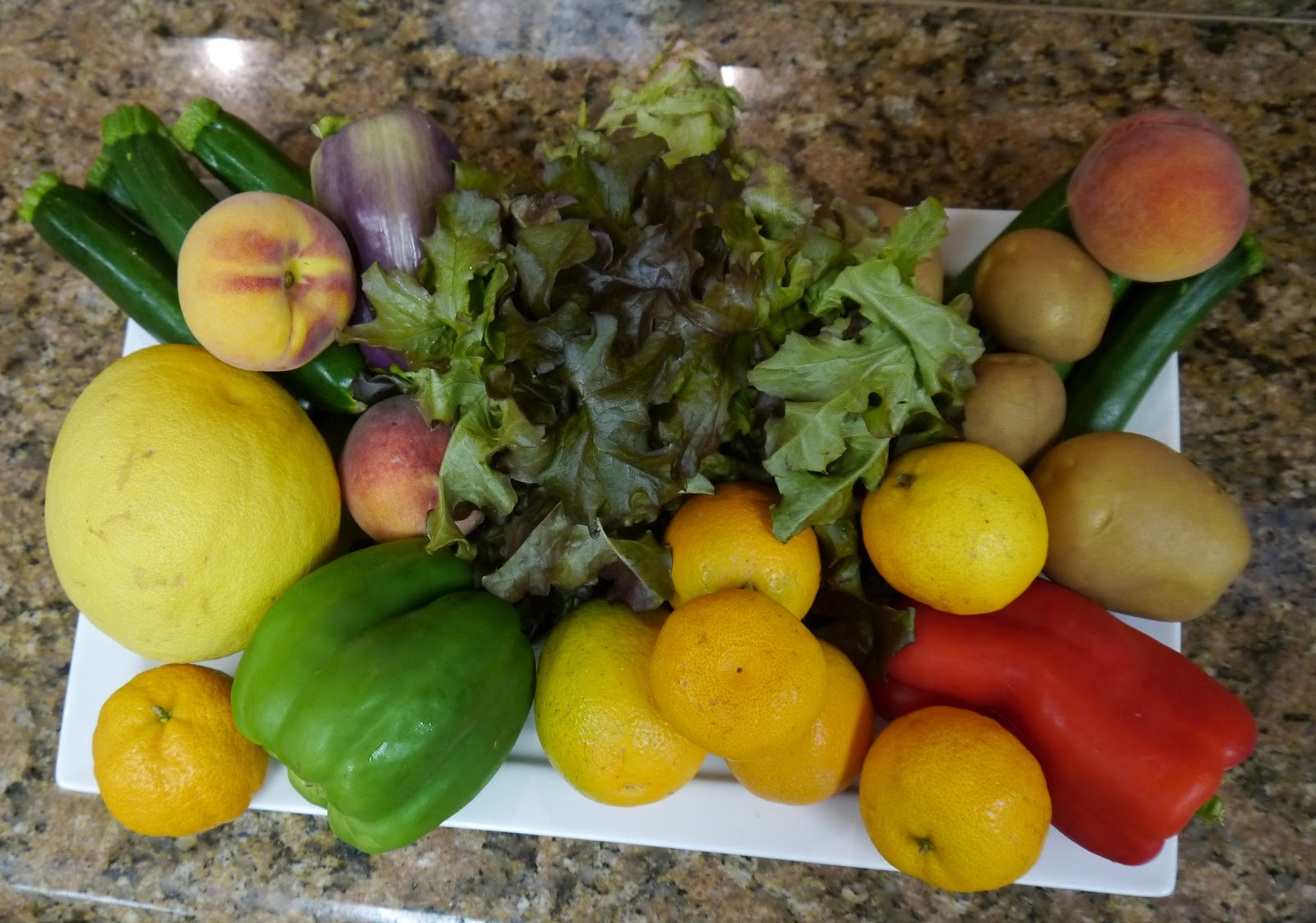
From lower left, honey nugget tangerines, Oro Blanco grapefruit,yellow peaches, zucchini, white pepper, red oak lettuce, Sierra gold potatoes, Sanguinelli Blood Oranges

 Somewhere between Friday morning and today, life has gotten in the way, and I didn't post anything about our amazing Specialty Produce Farmer's Market Bag class at Great News.  Last week's bag was equal amounts produce and fruit, which made it fun to work with and I coae up with a great menu for the students.  We did breakfast, with a Denver omelet casserole, Amaretto Peach French Toast,  Crispy smashed potatoes with goat cheese, scones with Oro Blanco Grapefruit and Sanguinelli Blood Orange Marmalade.
Truth be told, I've never been a fan of grapefruit, but the Oro Blanco's are sweet and delicious, and the size of Bocce balls! 

Orange Upside Down Cake

This delicious cake can be made with your favorite orange, but blood oranges look spectacular in this presentation. 

Serves 10


    1/2 cup unsalted butter
    3/4 cups firmly packed light brown sugar   
    2 Blood oranges, peel and pith removed, and sliced 1/4-inch thick

  1. Coat the interior of a 10-inch cake pan with non-stick cooking spray and set aside.
  2. Melt the butter in a small saucepan on medium heat, then add the brown sugar and stir for a few minutes until the brown sugar is completely combined and melted. 
  3. Pour the butter/brown sugar mixture over the bottom of the cake pan, and arrange the orange slices on the sugar syrup.  Set aside while making the cake batter. 


1 1/2 cups all-purpose flour
1/4 teaspoon baking soda
1/4 teaspoon salt
1/2 cup unsalted butter, softened to room temperature
1 1/3 cups sugar
1/2 teaspoon vanilla paste or vanilla extract
1 1/2 teaspoons grated orange zest
1/2 teaspoon orange oil (optional)
2 large eggs, at room temperature
2/3 cup sour cream
1/4 cup fresh orange juice
2 cups heavy cream, whipped stiffly for garnish


  1. Preheat the oven to 350 degrees.
  2. In the bowl of an electric mixer, cream the butter and sugar until they are light and fluffy.  Add the vanilla, orange zest and oil, if using.
  3. Add the eggs one at a time, mixing well after each addition, scraping down the sides of the bowl.
  4. Mix the sour cream and orange juice together, add with the flour, baking soda and salt, and beat until the mixture comes together and is smooth. 
  5. Transfer the batter into the prepared pan.  Bake for 45 to 55 minutes until a skewer inserted in to the center comes out clean.
  6. Transfer the cake pan to a rack and allow to cool for EXACTLY 10 minutes.
  7. Turn the cake out onto a serving platter, and serve at room temperature. 
  8. Refrigerate any leftover cake, and re-warm before serving, garnish with whipped cream, crème fraiche or vanilla ice cream.    
 Blood Orange and Oro Blanco Grapefruit Marmalade

Makes about 3 pints

2 grapefruit
5 to 6 blood oranges
3 cups water
6 1/2 cups sugar
One 1 3/4-ounce package pectin

Using a swivel peeler remove the zest from the fruit, and cut the zest into 1/4-inch pieces.
Add the zest to a saucepan with 3 cups of water, and bring to a boil. 
Simmer for 30 minutes.   
While the zest is boiling, cut the ends off the fruit, and remove the pith (white membrane) from the fruit. 
Slice the fruit into segments, dropping the segments into the water and zest.  Squeeze any juice from the membranes into the pan. 
Add the sugar to the fruit, and zest cooking liquid, and bring to a boil, the marmalade should reach 220 degrees on a candy thermometer.  
Add the pectin, and remove from the heat.  
Skim any foam from the top of the marmalade, and stir gently. 
Transfer to heat-proof containers, cool to room temperature and refrigerate for up to 1 month.
The marmalade can be canned, in canning jars if desired. 

Cook's Note:  You will need 4 cups of fruit pulp; so think of using this same recipe with lemon/lime/orange/grapefruit, any citrus combination.  When you are successful with one, you might want to add flavors: fresh ginger, mint simple syrup (in place of the sugar) to kick things into high gear.  The citrus right now in San Diego is amazing and Specialty Produce has got your citrus needs covered!  Since blood oranges only have a short season, stock up and juice them, or make them into marmalade.  The juice and the marmalade will freeze well in airtight containers.


Thursday, June 7, 2012

Farro: Rome's ancient grain

Farro is an ancient Roman grain, often confused with emmer (wheat) or spelt.  Grown for years in Lazio and Umbria, it went out of favor until some hot shot chef decided to include it on his menus, and the rest is history.  Small farmers in Umbria began growing farro again, and it has now made its way across the pond and we are seeing it in salads, sautes, desserts (think rice pudding) and even 'quasi' risottos.  Not only is it the "it" grain, it is also really good for you, whether you add it to soups, or vegetable dishes or use it in place of riso for risotto, its antioxidants, and minerals are all building blocks and should be part of your diet.
You can buy farro in specialty markets, I bought mine at Mona Lisa here in San Diego, an Italian grocer, or you can order it online from here.

Simple to cook, I will cook 2 cups of farro in boiling salted water for 12 minutes.  It has a nice resistance at that point, and can be added to other dishes to become a bit softer.   Any leftover cooked farro freezes, and you can have it on hand to make any number of other dishes, or dress with good olive oil and toss in some fresh herbs for a side dish.

Farro with Kale
Serves 6
This recipe is inspired by one from Lynn Rosetto Kasper's The Splendid Table website  
I've tweaked it a bit to fit my family's preferences, but you can add and subtract here as you wish.  I like to serve this at room temperature.  

2 tablespoons extra virgin olive oil
One 1/2-inch slice pancetta, finely diced
2 cloves garlic, minced
1/2 cup (about 1 small) onion finely chopped
One bunch kale, tough stems discarded and finely chopped into ribbons
1/4 cup white wine
grated zest of 1 lemon
2 cups cooked farro
1/3 cup golden raisins
1/4 cup toasted pine nuts

In a large skillet, heat the oil and saute the pancetta, until it is crispy.
 Add the garlic and onion, and saute until the onion begins to turn golden, about 5 minutes.
 
Add the kale and wine, cover and cook over medium heat for 5 minutes, stirring occasionally.


When the kale is wilted, add the farro, raisins, and pine nuts, tossing to combine and heat through.

 
Taste for seasoning adding salt or pepper if needed. Serve the farro as a bed for grilled anything, or as a side dish at room temperature.
Cook's Notes: 
  •  If you would like to use another green, collards, Swiss chard, or spinach will all work here. 
  • Any leftovers are great tossed with a bit of vinaigrette to serve alongside some grilled veggies for dinner.
  • If you would like to have a vegetarian farro, omit the pancetta, and use a bit more olive oil for sauteing.   

Thursday, May 31, 2012

It's All About the Pie


My friend Beth Howard has written this book, and it's terrific.  I first met Beth through her blog theworldneedsmorepie.  A friend had "liked" it on Facebook, and I started reading; her story is captivating, but even though there is sadness in this book there is never that "neediness" tone that I find in so many of these memoir type books (I'm talking to you Eat, Pray, Love lady)  I wrote to Beth when she posted that she'd finished her manuscript and it was at the editors and told her I couldn't wait to read the book, and  serendipitously,  she was in San Diego that weekend, and we met for lunch.  Seated next to San Diego Bay on a Chamber of Commerce day here, we talked, and talked, and a friendship began.
Her "baby" was birthed in March, and for the past few months she has been on a non-stop book tour in an RV.

 I will not give Beth's whole story away, but the book is about how she dealt with the unspeakable grief that followed the sudden death of her husband Marcus; she turned to making pie, and ended up at the American Gothic House in Eldon, Iowa, (going back to the state she was born in!) opened the Pitchfork Pie Stand and sells pies on the weekends to tourists and visitors to Eldon.  Now that the book is out, I have a feeling the population in Eldon quadruples on the weekends!


 Here's Beth with one of her creations---doesn't she look great? I think this photo was taken when it was 30 degrees that day---she's still smiling!!  Beth's signature pie is apple, but she makes an assortment of pies at the pie stand, depending on the availability of fruit.  My biggest take away from our lunch was that pie doesn't have to be perfect---that's for the frozen wonders you buy at the supermarket.  Your own pie should be messy--life is messy, and so is pie!
 
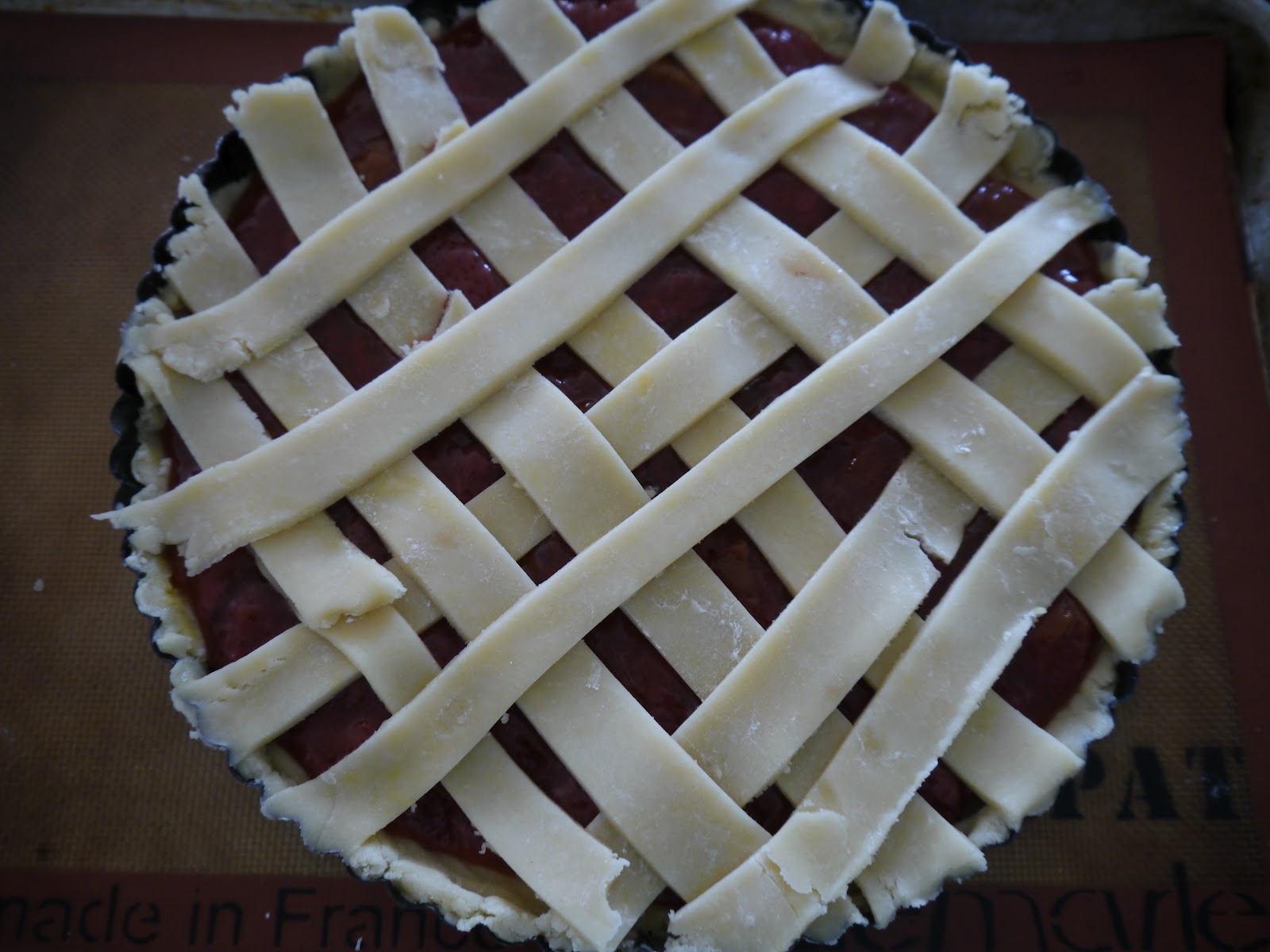
Since I finished the book, I've been wanting to make a pie; first I thought I'd make an apple pie, then key lime was calling my name, but today I had some leftover strawberries, and I was reminded of the crostata that my cousins make in Italy.  Crostata is a jam tart, usually apricot, but it can be any jam, or thickened fruit.  There is usually a lattice top (eyes glazing over) and the tart is cooked in a tart pan with a removable bottom.  This recipe is from my mother's cousin Vera who gave me the recipe in Italian, with the metric measurements; I found a way through trial and error to make it work, and the crust itself is pushed into the tart pan, and then the lattice is rolled out and transferred to top of the fruit filling.  The crust is very forgiving, and even if the lattice falls apart, it will cook itself together in the oven---not to worry, and it doesn't need to be woven, another plus.

Crostata
Serves 10


2 2/3 cup all-purpose flour
1 1/3 cups sugar
1 1/4 cup (2 1/2 sticks) unsalted butter, chilled and cut into small pieces
3 large egg yolks
2 cups sliced strawberries
1/4 cup sugar
2 tablespoons fresh lemon juice
3/4 apricot jam
confectioners' sugar
Vanilla ice cream or gelato to serve

Preheat the oven to 400 degrees and coat the inside of a 10-inch tart pan with non-stick cooking spray.  
In a food processor fitted with the steel blade combine the flour and sugar, and pulse on and off to distribute.  
Place the butter on top of the flour mixture, and pulse on and off until the mixture resembles meal.  


 With the machine running, add the eggs, and process just until the mixture begins to come together.
Transfer 1/2 of the mixture to the prepared tart pan, and press into the pan using a small rolling pan and plastic wrap.
Wrap the remaining dough in plastic wrap and refrigerate while making the filling.
In a small saucepan, heat the berries, sugar and lemon juice, until the sugar is dissolved.  Remove from the heat and add the apricot jam.  Spoon the mixture into the prepared crust.

Dust a board lightly with confectioner's sugar, and roll out the second piece of dough.
I use a huge silicone mat for rolling pie dough----easy to clean, and goes into the dishwasher. 
Cut the dough into strips about 3/4-inch wide.  Lift the strips with a long off-set spatula onto the pie, beginning in the middle and working your way out.  Then lattice the remaining pieces setting them over the other pieces on the pie.  Cut off any excess dough.  Sift a bit of confectioner's sugar over the pie, and
It's not perfect, but it's a pie!


bake for 15 minutes, lower the temperature to 375 degrees and bake an additional 20 to 25 minutes until the pie is golden brown on top and bubbling.  Remove from the oven and allow to cool.  Remove from the tart pan, and transfer to a serving dish.  Cut into wedges and serve with vanilla ice cream. 

 I hope you'll pick up a copy of Making Piece, it's a terrific book, and there are recipes for some darn good pies at the end.